
Views: 0 Author: Site Editor Publish Time: 2026-09-17 Origin: Site


Hydrogen presents a profoundly unique engineering challenge today. Its exceptionally low density and strict requirement for extreme high-pressure handling make standard volumetric measurement highly unreliable. You cannot simply deploy conventional tools for this volatile element and expect accurate results. Traditional devices routinely fail to capture precise readings under rapidly shifting thermodynamic states.
To solve this critical process problem, the Coriolis mass flow meter has emerged as the defacto standard for hydrogen applications. It delivers direct mass measurement entirely independent of erratic pressure or temperature fluctuations. This technological shift provides the stability required for modern energy infrastructure.
You need a rigorous strategy to navigate these complex system variables safely. This guide provides a definitive, engineering-focused framework for evaluating your instrument options. We will explore exactly how to select the right device for both commercial dispensing operations and continuous industrial hydrogen service.
Direct Measurement is Mandatory: Selecting a Coriolis meter eliminates the need for complex density compensation required by traditional volumetric meters.
Pressure Dictates Design: Hydrogen service often exceeds 700 bar; meter selection must prioritize high-pressure containment and zero-point stability.
Material Science Matters: Combating hydrogen embrittlement requires specific metallurgical choices (e.g., 316L stainless steel or specific nickel alloys) in the sensor tubes.
Compliance is Non-Negotiable: For commercial transactions, meters must meet stringent local and international standards (e.g., OIML, SAE) for a custody transfer flow meter.
Hydrogen is the lightest element on the periodic table. Under normal ambient conditions, it possesses extremely low density. This fundamental physical trait creates severe difficulties for conventional measurement technologies. Traditional volumetric instruments rely heavily on fluid momentum to drive mechanical rotors or generate measurable pressure differentials. They fail to generate an adequate signal-to-noise ratio when measuring such lightweight fluid. You end up reading process noise rather than genuine flow data. The instrument simply cannot detect the negligible physical force exerted by the low-density gas moving through the pipeline.
Industry requires extreme compression to store and transport this gas effectively. Systems routinely operate between 350 and 700 bar for vehicle dispensing applications. Compressing the fluid this aggressively causes massive thermodynamic density shifts. A standard gas flow meter often assumes a fixed density baseline. Alternatively, it uses sluggish algorithmic compensation to calculate mass. These compensation algorithms cannot track rapid state changes accurately. When pressure drops or spikes instantaneously, the volumetric calculations lag significantly behind reality. This lag introduces unacceptable error rates into your process control architecture.
You can bypass these physical limitations entirely using advanced instrumentation. A true mass flow meter measures fluid mass directly rather than inferring it from volume. It analyzes minute phase shifts occurring in vibrating sensor tubes. The flowing fluid twists the internal tubes proportionally to its exact mass flow rate. This direct measurement mechanism remains completely agnostic to fluctuating gas compositions. It ignores erratic thermodynamic states entirely. You receive highly accurate, real-time data regardless of how violently the pipeline pressure behaves.
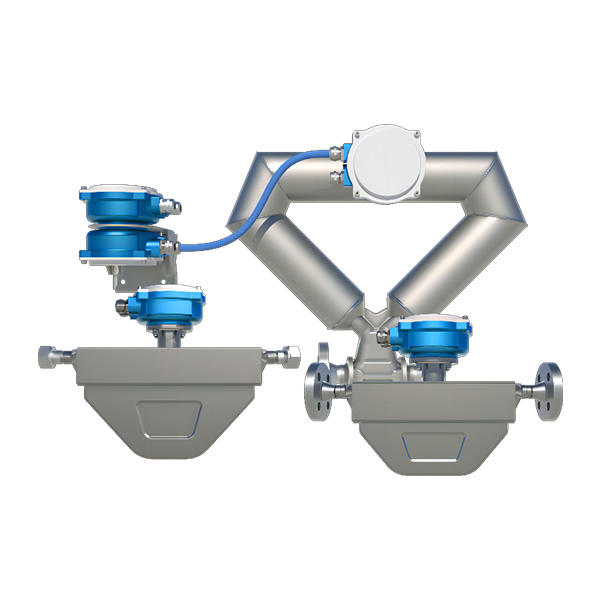
Modern hydrogen dispensers require incredibly rugged containment vessels. You must specify thick-walled sensor tubes to withstand extreme burst pressures safely. Standard industrial tubes will rupture catastrophically under 700 bar loads. However, utilizing thicker tube walls introduces a severe mechanical challenge for instrument manufacturers. Thicker metal structural elements become physically stiffer and less responsive.
Stiffer tubes resist the subtle twisting forces generated by low-density fluid. This structural rigidity severely degrades zero-point stability. You might observe false flow readings even when your pipeline sits completely closed and idle. This baseline drift destroys batch accuracy over time. The chosen instrument must demonstrate proven digital signal processing algorithms. These advanced algorithms actively filter out mechanical noise. They stabilize the zero-point reading automatically. They ensure high accuracy remains intact despite the rigid, high-pressure tube architecture.
Hydrogen atoms are incredibly small and highly reactive. They easily permeate the crystalline lattice structure of many standard industrial metals under high pressure. Once trapped inside the metal, they combine to form larger molecules. This internal molecular expansion causes dangerous micro-fractures. We call this destructive phenomenon hydrogen embrittlement. It fundamentally compromises structural integrity.
You cannot ignore this harsh material science reality during selection. Combating embrittlement requires highly specific metallurgical choices for all wetted parts. Engineers mandate 316L stainless steel or proprietary nickel alloys exclusively. These specialized materials resist elemental permeation effectively. They prevent catastrophic sensor failure over long operational lifespans. Using improper alloys introduces severe safety hazards into your facility. Always verify the exact metallurgical composition of the internal measuring tubes before purchasing.
You must size the measuring instrument properly for your specific operational application. A high-velocity vehicle dispensing station demands a completely different performance profile than a steady-state industrial feed line. Sizing determines the fluid velocity passing through the internal sensors. Proper velocity ensures the highest possible measurement resolution.
Consider the light-duty vehicle refueling process. It begins with a massive surge of highly compressed fluid. As the vehicle receptacle fills, the system pressure equalizes. The flow rate subsequently tapers off into a mere trickle before shutoff. A wide turndown ratio becomes critically important during this sequence. The instrument must accurately capture both the violent initial peak flow and the final tail-end trickle. Poor turndown capabilities ruin overall batch accuracy during the final delicate fill stages.
Every kilogram of hydrogen holds significant commercial energy value. Even a minor percentage error translates into massive volumetric discrepancies over an annual operational cycle. Extreme precision is absolutely mandatory for commercial viability. You cannot rely on general-purpose industrial instruments when billing customers or transferring ownership between corporate entities.
You must secure specific regulatory certifications to achieve commercial readiness in global hydrogen flow measurement. The OIML R 139 standard governs compressed gaseous fuel measuring systems internationally. It dictates strict accuracy classes and testing procedures. Furthermore, the SAE J2601 and SAE J2799 frameworks establish rigid protocols for light-duty fueling stations. These standards dictate exact temperature ranges, pressure ramp rates, and communication protocols. Additionally, hazardous area approvals ensure critical operational safety. You need verified ATEX, IECEx, or Class 1 Div 1 certifications when operating in potentially explosive environments.
A certified custody transfer flow meter guarantees full legal metrology compliance. Never rely solely on theoretical marketing data sheets. Always ask instrument manufacturers to provide documented, third-party laboratory test results. Real-world validation proves the equipment performs accurately under actual field dispensing conditions. This documentation protects your facility during regulatory audits and commercial disputes.
Different hydrogen applications impose vastly different physical constraints on measurement instrumentation. Understanding your specific operational environment ensures successful technology deployment.
Hydrogen Refueling Stations (HRS) present unique mechanical challenges. Compact facility footprints severely restrict installation straight-runs. The dispensing sequence involves rapid pressure cycling and extreme -40°C pre-cooling stages. This intense thermal shock stresses internal metallic sensors continually. Furthermore, start-stop measurement accuracy dictates final transaction billing. HRS applications require instruments featuring advanced digital transmitters. These transmitters process complex signals rapidly. They deliver the split-second response times needed for volatile, high-speed batching operations.
Conversely, industrial production environments prioritize different metrics. Electrolyzers and Steam Methane Reforming (SMR) plants operate continuously around the clock. They require seamless digital integration into plant-wide DCS or SCADA control systems. The raw gas streams often contain transient moisture or chemical impurities before purification. Industrial applications focus heavily on long-term calibration stability rather than split-second response times. They utilize advanced diagnostic data outputs to detect two-phase flow conditions instantly. This diagnostic capability prevents impure batches from moving downstream.
Application Comparison Chart: Dispensing vs. Industrial Production
Application Parameter | Hydrogen Refueling Stations (HRS) | Industrial Production (SMR/Electrolyzers) |
|---|---|---|
Flow Profile | Highly dynamic, rapid start/stop batching. | Continuous, steady-state baseline flow. |
Thermal Conditions | Extreme cycling, often pre-cooled to -40°C. | Relatively stable ambient or elevated temperatures. |
Primary Technical Requirement | Split-second response times; wide turndown ratios. | Long-term calibration stability; two-phase flow detection. |
System Integration | Standalone dispenser electronics; point-of-sale. | Plant-wide DCS/SCADA network protocols. |
Coriolis instruments inherently cause a measurable process pressure drop. This phenomenon occurs because the incoming fluid must forcefully navigate curved, vibrating internal tubes. You must carefully evaluate how different tube designs impact overall system efficiency. U-shape tubes offer extreme measurement sensitivity but create significantly higher pressure drops. Straight or delta-shaped tubes reduce this restriction considerably. Higher pipeline pressure drops force downstream mechanical compressors to work significantly harder. You must optimize the internal architecture to minimize wasted energy demands.
Removing a massive, high-pressure instrument for routine factory recalibration creates severe logistical nightmares. It forces extended process downtime. You physically break the critical pipeline seal, introducing potential leak paths upon reinstallation. To mitigate these disruptions, evaluate vendor software capabilities extensively.
Look for vendors offering onboard, in-situ verification software. This internal technology proves instrument calibration continuously. It confirms structural tube integrity and electronics health without removing the unit from the active pipeline. This verification data satisfies many regulatory audit requirements directly.
Follow this standardized 3-step shortlisting logic when evaluating potential instrumentation:
Define Maximum Parameters: Document the absolute maximum process pressure and extreme temperature ranges the instrument will experience during worst-case scenarios.
Identify Required Approvals: List every mandatory legal metrology standard and hazardous area certification required for your specific global region.
Compare Trade-offs: Analyze the strict accuracy requirements against allowable pressure drop thresholds to select the optimal tube geometry.
Selecting the optimal measurement technology for hydrogen service requires a careful engineering balance. You must overcome intense material stresses like extreme pressurization and chemical embrittlement. Simultaneously, you must maintain exceptional measurement precision under fluctuating thermodynamic conditions. The right instrument addresses both durability and accuracy seamlessly.
We strongly encourage you to consult dedicated application engineers early in your design phase. Provide them your exact P&ID documentation, peak flow rates, and expected temperature variables. Let them run specialized manufacturer sizing software to validate performance metrics before you commit to any specific model. Rigorous upfront evaluation ensures long-term operational success.
A: Rarely. Standard meters typically lack the required pressure ratings and specific metallurgy to prevent embrittlement. Upgrading seals and electronics does not fix the fundamental weakness of standard internal measuring tubes. Attempting to retrofit standard devices for high-pressure hydrogen introduces severe structural safety risks and guarantees poor measurement accuracy.
A: For custody transfer applications, expect rigorous accuracy ratings of ±0.5% or better. However, extreme high-pressure tube stiffness can negatively impact low-flow accuracy if the meter is not properly sized. You must ensure the instrument turndown ratio matches your specific batching profile to maintain this high baseline accuracy.
A: Higher pressure drops require significantly more energy from downstream mechanical compressors. Buyers must carefully balance the need for high fluid velocity against the resulting mechanical energy demands. Selecting a less restrictive tube geometry reduces compressor workload, though it may slightly reduce low-end flow sensitivity.


