
Views: 0 Author: Site Editor Publish Time: 2026-11-09 Origin: Site


Accurate data acts as the lifeblood of modern manufacturing. Industrial processes rely on precise tracking to maintain strict quality control. Plant managers and control engineers face mounting pressure to modernize their aging facilities. Transitioning from legacy chart recorders to digital systems is heavily driven by strict compliance demands, data integrity, and real-time process visibility.
Evaluating how these digital units capture, process, and secure data remains critical before integrating them into a live industrial environment. A mismatched system risks severe audit failures and exposes corporate networks to serious vulnerabilities. You need to thoroughly understand the underlying mechanisms to avoid costly integration mistakes.
This guide deconstructs the internal mechanics of a modern digital recording system. We will explain the technical workflow from raw sensor input to compliance-ready reporting. You will explore everything from signal processing to automated batch tracking. This knowledge provides a clear framework for evaluating your next upgrade confidently.
Signal Processing: Universal inputs capture analog signals (thermocouples, RTDs, mA, V) and convert them to secure, high-resolution digital data.
Data Integrity: Tamper-proof, encrypted internal memory ensures compliance with stringent industry standards (e.g., FDA 21 CFR Part 11, Nadcap).
Real-Time Visibility: Customizable trend analysis and alarm relays allow operators to intervene before process deviations cause batch loss.
System Evaluation: Shortlisting an industrial data logger requires matching channel scalability, communication protocols (Modbus, Ethernet), and environmental durability to specific plant requirements.
Any modern Paperless Recorder begins its critical job at the physical interface. Universal input modules serve as the vital bridge between your manufacturing process and the digital realm. They allow the device to interface directly with dynamic physical environments. You can connect mixed sensor types across isolated channels simultaneously. These robust inputs handle temperature, pressure, flow, and level sensors natively. They eliminate the need for bulky external signal conditioners.
Analog-to-Digital (A/D) conversion forms the beating heart of this process. The recorder actively samples continuous physical signals. It then converts these physical waves into discrete numerical values. High-quality A/D converters ensure minor temperature or pressure fluctuations register accurately. They prevent signal degradation during the transfer from the sensor to the motherboard.
Engineers must carefully balance sampling rates against baseline accuracy. High-speed data capture seems ideal for monitoring rapid changes. However, it often invites electrical noise from nearby motors and drives. Advanced filtering techniques actively strip out unwanted electromagnetic interference. Furthermore, cold-junction compensation maintains absolute accuracy for thermocouples in harsh, fluctuating environments. You get clean, reliable data without sacrificing vital response times.
Data loss during a crucial batch run causes immense regulatory headaches. Modern devices use specific memory architectures to prevent this catastrophe. They rely heavily on non-volatile internal memory. This storage retains information perfectly even when power fails completely. Unlike volatile RAM, non-volatile flash memory survives physical disruption and sudden plant blackouts. Your records remain intact.
Security also depends entirely on tamper-proof file architecture. We have shifted entirely from fragile physical charts to encrypted binary files. Open-format files like raw CSVs often fail compliance audits. They are far too easy for an operator to alter. Proprietary data formats secure the entire chain of custody. They lock down the raw data fundamentally. Auditors trust these encrypted records to meet stringent FDA 21 CFR Part 11 or aerospace Nadcap standards.
Redundancy mechanisms add another critical layer of protection. Mission-critical batch data requires robust fail-safes. You can deploy multiple backup strategies:
SD Cards: Offer massive local storage capacity for years of continuous logging.
USB Drives: Allow quick manual data extraction directly on the factory floor.
Automated FTP Backups: Push data seamlessly to secure plant servers over the network.
These redundant pathways ensure an Industrial Data Logger never loses a single reading, even during network outages.
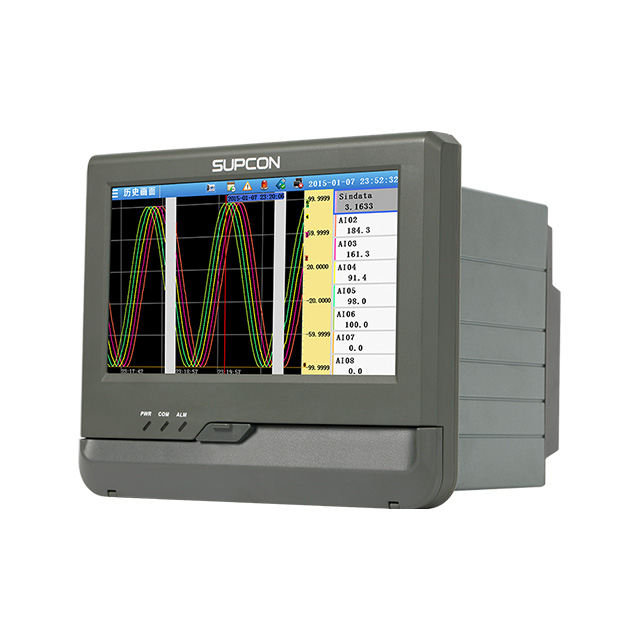
Operators need immediate visibility to keep thermal cycles and pressure vessels on track. Display mechanics dictate how a Process Recorder translates raw digital values into actionable visual formats. You can configure horizontal or vertical trend lines depending on user preference. Bar graphs show instant tank levels visually. Digital readouts provide exact numerical states for precise monitoring. High-resolution touch screens make these elements easily readable from a distance.
Historical scrubbing empowers operators directly on the floor. It allows them to pause real-time tracking temporarily. They can intuitively scroll back through historical data directly on the screen. Crucially, ongoing logging continues flawlessly in the background. Operators can investigate recent anomalies or temperature dips without interrupting the secure data acquisition cycle.
Alarm logic transforms a passive display screen into an active safeguard. You easily configure specific setpoints, rate-of-change thresholds, and deviation alarms. When a process parameter breaches a defined limit, the recorder takes immediate action. It triggers physical internal relays or digital outputs. This logic automates process shutdowns instantly. It can also alert broader SCADA systems to deploy emergency cooling protocols, saving valuable product batches.
Quality audits demand organized, unalterable documentation. Automated batch reporting simplifies this massive administrative undertaking. The system intelligently brackets data based on discrete start and stop triggers. It creates separate, easily identifiable files for specific manufacturing batches or thermal cycles. You no longer have to manually sift through months of continuous data to find one specific production run.
Audit trails silently track every human interaction. They rigorously monitor user logins, parameter changes, and alarm acknowledgments. The internal system logs these events with time-stamped, unalterable entries. This ultimate transparency proves exactly who did what and when, satisfying demanding inspectors.
Export and analysis software bridges the gap between the plant floor and the auditor's desk. Proprietary PC software interfaces directly with the field hardware. You can execute a seamless reporting workflow:
Download the encrypted batch files via Ethernet, SD card, or USB.
Import the secure files into the proprietary desktop software environment.
Apply required statistical analysis, including Min, Max, Average, and lethality (F0) calculations.
Generate auditor-friendly, un-editable PDF reports ready for physical or digital signature.
This highly automated workflow eliminates human transcription errors completely.
Choosing the right equipment requires matching technical specifications to harsh plant realities. Scalability requirements often dictate the final hardware choice. You must rigorously assess base channel counts versus modular expansion capabilities. Avoid over-specifying initial inputs. Ensure robust future-proofing for added sensor loops as your facility inevitably grows.
Integration and connectivity determine how well the new unit plays with legacy equipment. Evaluate Modbus RTU, Modbus TCP, and Ethernet capabilities carefully. They enable seamless data integration into existing Distributed Control Systems (DCS) or SCADA architectures. Proper communication protocols eliminate isolated data silos.
Comparing hardware tiers reveals significant operational differences. Consider the AR7000 Paperless Recorder as a strong baseline for high-fidelity evaluation. It boasts rapid touch screen responsiveness, rugged IP65/NEMA 4 front panel ratings, and robust internal math function capabilities. These tier-one features ensure longevity in punishing environments.
Success criteria must map specific features directly to tangible operational outcomes. Review the performance mapping below.
Features to Outcomes Mapping Chart
Hardware Feature | Technical Capability | Operational Outcome |
|---|---|---|
Ethernet Connectivity | Direct network integration and FTP transfer | Reduces manual data harvesting time by over 80% |
Modular Input Slots | Hot-swappable sensor cards | Decreases future expansion downtime significantly |
IP65/NEMA 4 Bezel | Dust and high-pressure water jet protection | Eliminates display failures from washdown procedures |
Encrypted Data Formats | Binary file locking | Guarantees FDA and Nadcap audit success |
Upgrading your tracking infrastructure involves both physical and digital hurdles. Wiring and panel cutout constraints present immediate installation challenges. Retrofitting requires physically adapting legacy panel cutouts. You might need custom metal adapter plates to fit modern, compact screens into old, oversized enclosures. Managing signal wire routing remains equally important. Proper physical separation prevents electromagnetic interference (EMI) from high-voltage lines from distorting sensitive sensor readings.
Network security risks naturally escalate when you connect plant equipment to corporate networks. Exposing a recording device directly to the internet invites cyber threats.
Isolate your hardware IP addresses on a dedicated, secure VLAN. Manage user access levels strictly through the device interface. Assign unique, traceable login credentials to every single operator. Restrict parameter modification rights exclusively to engineers and supervisors. This limits accidental configuration changes.
Operator adoption often dictates the ultimate success of a digital rollout. Digital interfaces introduce a noticeable learning curve for seasoned technicians accustomed to paper charts.
Do not overload the default viewing screen. Too many flashing numbers and dense trend lines cause rapid operator overwhelm. Instead, configure simplified, custom screens. Focus heavily on the three to five parameters that truly matter for the current operational batch. This focused strategy reduces training time and minimizes panic during critical alarm events.
A paperless recording system acts as much more than a bright digital screen. It serves as a highly secure data acquisition hub, proving absolutely critical for quality control and audit survival. Base your procurement decision firmly on verifiable data security, required channel density, and strict compliance capabilities rather than superficial display features.
Looking ahead, outline a clear, phased transition plan. First, review the technical specifications of your shortlisted devices against your current physical sensor inventory. Second, request a live demo of the proprietary reporting software to ensure it effortlessly meets your specific auditing standards. Finally, verify network compatibility and security protocols directly with your IT department. Taking these targeted, proactive steps guarantees a smooth upgrade and long-term operational resilience.
A: Most industrial units feature non-volatile memory and internal battery backups specifically for the real-time clock. This combination ensures data logging pauses safely and resumes seamlessly upon power restoration without experiencing any file corruption or data loss.
A: Yes, electrically they function as direct replacements. However, physical panel cutouts may require metal adapter plates. Additionally, operators will require basic training on navigating the new digital interface and managing secure data export protocols.
A: Typically, annual calibration is strictly required to maintain baseline accuracy and meet compliance standards like ISO 9001 or AMS2750. However, the exact calibration frequency depends heavily on your specific industry regulations and internal quality manuals.
A: For strict compliance reasons, raw data is typically saved in encrypted, tamper-proof proprietary formats. While it can be exported to CSV or Excel for secondary analysis, the original secure binary file serves as the only legal record of the process.


