
Views: 0 Author: Site Editor Publish Time: 2026-08-22 Origin: Site


Transitioning from traditional volumetric methods to true direct mass measurement represents a pivotal operational decision. This shift directly influences process control stability and overall revenue protection. Relying solely on volume leaves your facility vulnerable to unseen fluid fluctuations. We acknowledge the high upfront capital expenditure required for premium Coriolis technology. Consequently, this guide systematically evaluates when such an investment is fully justified by measurable operational returns.
Our primary purpose is to provide engineers and plant managers an objective evaluation framework. We will thoroughly explore Coriolis accuracy, dual-variable capabilities, and stringent installation realities. You will learn how to navigate complex real-world variables. You will discover practical methods to mitigate external mechanical interference. This knowledge directly empowers you to protect your long-term process integrity. You can make confident instrumentation choices moving forward. Your operations will achieve superior yield tracking and rock-solid regulatory compliance.
Direct Mass & Density: Coriolis meters eliminate the need for complex compensation calculations by providing simultaneous mass flow and density measurement.
High-Stakes Accuracy: Standard accuracy rates (often 0.1% or better) make them the default standard for custody transfer and high-value batching.
Fluid Versatility: Highly effective across diverse profiles, from clean liquids to challenging liquid gas slurry metering.
Implementation Caveats: Real-world performance relies heavily on proper mounting, vibration isolation, and managing pressure drop.
Measuring fluid volume inherently introduces unacceptable margins of error into high-value processes. Fluids constantly expand and contract under varying environmental conditions. Sudden temperature changes alter the physical space a liquid occupies inside the pipe. Pressure shifts heavily compress flowing gases. If you rely on raw volume, you measure a highly unstable variable. Operations teams then need complex compensation calculations to estimate the true mass. These mathematical corrections introduce further layers of uncertainty. You ultimately lose track of exact product quantities. Upgrading to mass flow measurement fundamentally transforms your entire production efficiency by eliminating these compensation errors entirely.
High measurement accuracy directly drives facility profitability. You absolutely want to reduce continuous product "give-away." Even a seemingly negligible 0.5% measurement error scales massively over a fiscal year. Standardizing your lines on a Coriolis mass flow meter stops this invisible product loss immediately. You achieve highly precise batching operations. Yield management becomes incredibly predictable. You only bill your clients for the exact mass delivered. Operations no longer suffer from unexplained inventory shrinkage at the end of the month.
Exceptional precision matters most when valuable fluids legally change ownership. During these transactions, the custody transfer flow meter acts as your primary financial register. It guarantees rigorous compliance across multiple jurisdictions. It heavily protects corporate revenue streams. These advanced meters align perfectly against recognized API and ISO standards. Leading global institutions mandate these specific standards for all billable fluid transfers. Upgrading ensures your facility passes external audits effortlessly.
Measurement Type | Key Variables Required | Error Susceptibility | Primary Industrial Use Case |
|---|---|---|---|
Volumetric | Volume, Temperature, Pressure | High (Requires constant sensor compensation) | Low-value water and basic utility tracking |
Direct Mass (Coriolis) | Mass, Density (Measured simultaneously) | Very Low (Immune to thermal fluid shifts) | Custody transfer and high-precision batching |
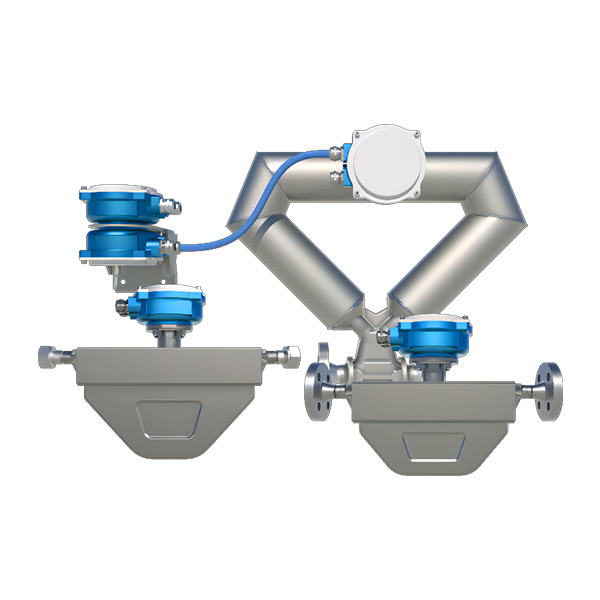
You must clearly define the absolute baseline of meter accuracy before making a selection. Engineers must look well beyond standard percentage claims prominently displayed on brochures. The "zero point" represents the instrument reading when fluid stands perfectly still inside the pipe. Zero stability dictates your maximum absolute baseline error. It becomes profoundly critical at very low flow rates. If the zero point drifts over time, your overall measurement accuracy degrades significantly. You cannot simply calibrate away inherent zero drift. You must evaluate this metric stringently.
Two-phase flow presents a notorious hurdle for fluid mechanics. Older Coriolis designs often stall completely in these conditions. They drop the processing signal when gas bubbles suddenly appear. We observe this frequently in aerated liquids or emptying tanks. Modern digital transmitters handle these difficult bubble inclusions brilliantly. They maintain continuous tube oscillation by dynamically adjusting power. They keep the measurement active despite heavy entrained gas. You retain full visibility during tricky batch-end sequences.
Environmental factors constantly threaten measurement precision across industrial plants. Mechanical pipe vibration introduces massive signal noise into the sensors. Extreme temperature shocks rapidly alter internal tube stiffness. You must strictly evaluate specific vibration immunity limits. Look for meters utilizing very high driving frequencies. Higher operating frequencies reject background plant noise much better. They filter out interference from nearby heavy equipment automatically.
Best Practice: Always review the manufacturer's published zero stability rating before examining the flat accuracy percentage.
Best Practice: Select advanced digital transmitters equipped with phase-shift diagnostics to handle unexpected phase changes.
Common Mistake: Installing the unit near heavy reciprocating pumps overpowers the internal oscillation frequency.
Common Mistake: Ignoring sudden thermal shocks causes the protective sensor casing to expand unevenly, twisting the tubes.
The resonant frequency of the oscillating sensor tubes changes based exactly on fluid mass. This natural physical phenomenon allows the device to act as a highly accurate density flow meter. A heavier liquid lowers the vibration frequency predictably. A lighter liquid raises the frequency proportionally. You capture this crucial density data instantly. The transmitter continuously updates these readings without requiring a second instrument. This dual functionality simplifies your entire pipeline architecture.
Simultaneous density measurement unlocks powerful real-time concentration tracking. You eliminate dedicated sampling stations entirely. You save valuable pipeline space. You vastly reduce ongoing maintenance hours. Plant operators can react immediately to off-spec mixtures before they ruin a massive batch.
Brix Concentration: Continuously monitor sugar content during automated food and beverage processing to ensure flavor consistency.
Plato Gravity: Track wort fermentation stages accurately inside commercial breweries to determine precise alcohol yields.
API Gravity: Verify crude oil grades instantly across remote pipeline transfer stations to ensure correct valuation.
Percent Solids: Determine the exact dry mass fraction suspended within an aqueous carrier fluid during chemical mixing.
Consider the mechanics of handling heavy non-Newtonian fluids. You must evaluate performance critically in liquid gas slurry metering. Minor density variations quickly reveal shifting solids concentration. You can monitor these critical changes dynamically. High-velocity slurries often cause rapid mechanical wear on standard intrusive probes. Using a single robust device for both mass and density streamlines the entire operation. It provides unmatched visibility into your most challenging fluid profiles.
Internal tube sizing directly dictates fluid velocity moving through the meter. Smaller measuring tubes significantly increase signal sensitivity. However, they also create a much higher permanent pressure drop across the system. You face a strict engineering trade-off here. You must carefully balance long-term pump energy costs against immediate measurement precision. High pressure drop demands substantially more electrical pumping power day after day. You should prioritize these factors based on your specific process margins and existing pump capacities.
Harsh process fluids relentlessly attack metal sensor tubes. You must select wetted materials very carefully to prevent catastrophic leaks. Standard 316L Stainless Steel easily handles many generic liquid applications safely. Highly corrosive fluids absolutely require advanced alloys like Hastelloy or Titanium. You also must consider strict process temperature constraints. Prolonged high heat slowly alters structural integrity over years of service. It degrades the modulus of elasticity, shifting your accuracy baseline if ignored.
Look deeply into the digital transmitter capabilities during your final evaluation. Rich diagnostic outputs matter greatly for predictive maintenance schedules. Rapid field-repairability saves weeks of costly operational downtime. The SFM800 flow meter serves as an excellent structural example here. It features an incredibly robust industrial design. It fits perfectly into highly demanding process environments while offering intuitive digital interfaces. You gain deep insights into tube health and signal strength directly from the control room.
Selection Factor | Primary Engineering Priority | Potential Risk if Ignored |
|---|---|---|
Line Size Reduction | Maximize flow velocity for better low-end accuracy | Excessive pressure drop causing downstream pump cavitation |
Wetted Material | Ensure deep chemical and thermal process compatibility | Rapid internal tube erosion or sudden stress corrosion cracking |
Transmitter Power | Manage entrained gas and dual-phase flow scenarios | Complete signal loss and sudden measurement failure |
Correct mechanical installation strictly dictates operational success. The process fluid itself dictates your required mounting orientation. You must always point the measuring tubes downward for standard liquids. This specific position prevents trapped gas bubbles from gathering inside the bend. Conversely, you must point the tubes upward for flowing gases. This position prevents stray liquid condensate from pooling at the bottom. Improper physical orientation ruins measurement accuracy almost immediately. It creates false density readings and erratic flow signals.
You must thoroughly isolate the meter body from external physical forces. Heavy pipe stress physically twists the internal manifold. Excessive flange bolt torque warps the delicate internal geometry. Heavy external machinery vibrations severely confuse the internal pickup sensors. Always use proper engineered pipe supports. Secure the adjacent piping firmly on both sides of the measuring instrument. Leave enough flexibility in the broader piping layout to absorb thermal expansion safely.
Final commissioning requires a very strict operational procedure. You must perform a careful zero-point calibration right in the field. Do this only after mechanical installation is completely finished. First, run the process fluid normally. Allow the entire system to reach full operating pressure and normal temperature. Next, tightly close the downstream blocking valve. Ensure absolutely zero fluid flow. Finally, initiate the electronic zeroing process through the transmitter interface. This establishes your true operational baseline.
Coriolis technology remains the absolute gold standard for measuring mass and density simultaneously. It eliminates complex compensation calculations and handles diverse fluid profiles effortlessly. However, achieving maximum operational return relies heavily on correct device sizing and meticulous mechanical installation. You cannot ignore vibration isolation or proper zeroing procedures.
You should deeply audit your current volumetric error rates today. Calculate the exact potential financial savings from reducing your hidden product giveaway. Identify where density variations currently cause quality control issues. Complete this comprehensive internal audit before contacting any external vendor.
Consult with specialized application engineers immediately. Ask them to run professional sizing software for your specific systems. Have them calculate the exact predicted pressure drop for your unique fluid profile. This proactive approach ensures you select the perfect instrument for your facility.
A: No. Unlike magnetic or ultrasonic meters, Coriolis meters are completely immune to fluid flow profile distortions. You do not need long upstream or downstream straight pipe runs. This unique characteristic makes them absolutely ideal for extremely tight mechanical installations.
A: Yes. Because it measures direct mass and fluid density simultaneously, the digital transmitter calculates highly accurate volumetric flow dynamically. The unit mathematically divides the total mass by the measured density to output a perfect volume reading in real time.
A: Primary culprits include severe mechanical pipe stress and high levels of entrained gas exceeding the transmitter's drive capability. Sudden fluid flashing, destructive pump cavitation, and abrasive tube erosion from high-velocity slurries also quickly degrade overall measuring accuracy.
A: Generally, it runs higher than full-bore meters like magmeters due to restrictive internal tube geometry and internal flow splitting. You can successfully mitigate this by intentionally oversizing the installed meter. However, oversizing directly sacrifices low-end flow measurement sensitivity.


