
Views: 0 Author: Site Editor Publish Time: 2026-09-24 Origin: Site


Direct wiring of temperature sensors to a control system often leads to signal degradation, noise interference, and maintenance bottlenecks. Relying on raw millivolt signals across a sprawling plant floor invites costly measurement errors. You risk compromising your entire automation strategy without a robust signal conversion method. This is where a reliable temperature transmitter proves indispensable. It converts low-level sensor signals into stable, standardized outputs like 4-20mA to ensure process integrity. By isolating and amplifying the signal, it protects your control systems from external electrical noise.
We will explore an engineering-aligned framework for evaluating and shortlisting the right device. You will learn how to align sensor compatibility, plant architecture, and compliance mandates. Ultimately, this guide helps you optimize your measurement loops for long-term reliability. A structured approach guarantees you choose equipment suited perfectly to your specific plant conditions.
Sensor matching is non-negotiable: Selection must align with the specific RTD or Thermocouple type, though universal transmitters offer inventory flexibility.
Location dictates form factor: Plant layout and environmental harshness determine whether a head-mount, DIN-rail, or field-mount configuration is required.
Signal stability requires isolation: Galvanic isolation is critical for mitigating ground loops and electromagnetic interference (EMI) in heavy industrial environments.
Compliance limits choices: Hazardous area classifications (ATEX, IECEx) and functional safety requirements (SIL) strictly dictate permissible transmitter models.
Before reviewing manufacturer catalogs, you must audit your specific operational needs. Every process temperature measurement application has unique demands. We must evaluate accuracy, environmental hazards, and business goals.
You must differentiate between critical control loops and basic monitoring points. Critical loops demand high accuracy. They often require sensor-transmitter matching using Callendar-Van Dusen equations. This mathematical alignment removes specific sensor inaccuracies. It creates a highly precise measurement loop. Conversely, basic monitoring points tolerate standard factory calibrations. Do not over-specify equipment for simple indication tasks. Over-specifying drains project budgets unnecessarily. Reserve your highest accuracy requirements for safety-critical or quality-dependent reactor control.
Industrial plants generate significant electrical noise. Variable Frequency Drives (VFDs), large motors, and heavy switchgear create interference. You must identify potential sources of electromagnetic interference (EMI) near the installation site. Radio frequency interference (RFI) from two-way radios also disrupts unshielded electronics. You need devices rated to reject these specific interferences. Poorly specified instruments will broadcast erratic spikes to your PLC.
Engineers often view instrumentation purely through a technical lens. However, you must tie equipment reliability directly to business outcomes. A stable signal reduces process variability. Lower variability directly leads to lower scrap rates. It also minimizes unexpected downtime. When you pitch upgrades to management, focus on these metrics. Robust measurement guarantees smoother production runs and higher yields.
The chosen instrument must interpret raw sensor physics perfectly. If the hardware cannot read your specific probe type correctly, accuracy drops to zero. You need the right temperature sensor transmitter to translate these complex inputs.
Resistance Temperature Detectors (RTDs) and Thermocouples (TCs) require entirely different processing methods.
RTD Requirements: RTDs change resistance based on heat. Your electronics must compensate for the resistance of the lead wires. Evaluate 2-, 3-, or 4-wire configurations. Always choose 4-wire RTD setups for the highest accuracy. It cancels out lead-wire resistance entirely.
Thermocouple Requirements: Thermocouples generate a millivolt signal based on a temperature gradient. They require Cold Junction Compensation (CJC). CJC accounts for the ambient temperature at the connection point. Without precise CJC, thermocouple readings will drift as the weather changes.
You can buy units programmed for one sensor type or units that accept everything. Each strategy has a specific place in plant design.
Device Configuration Comparison
Configuration Type | Primary Benefits | Best Use Case |
|---|---|---|
Dedicated Inputs | Lower upfront unit cost. Simple installation. | Highly standardized, unchanging OEM processes. |
Universal Inputs | Reduces spare parts inventory. Accepts RTD, TC, Ohm, and mV. | Complex chemical plants requiring flexible maintenance. |
Dedicated inputs are cost-effective when you build identical skids repeatedly. However, universal inputs significantly reduce spare parts inventory complexity. They carry a higher upfront cost but pay for themselves quickly during maintenance emergencies.
Modern advanced units offer dual-sensor inputs. This feature provides massive advantages for mission-critical applications. Hot backup functionality automatically switches to a secondary sensor if the primary one fails. It keeps your process running uninterrupted. Sensor drift alerts monitor both probes simultaneously. If their readings diverge beyond a set threshold, the device alerts technicians. This allows predictive maintenance before a catastrophic failure occurs.
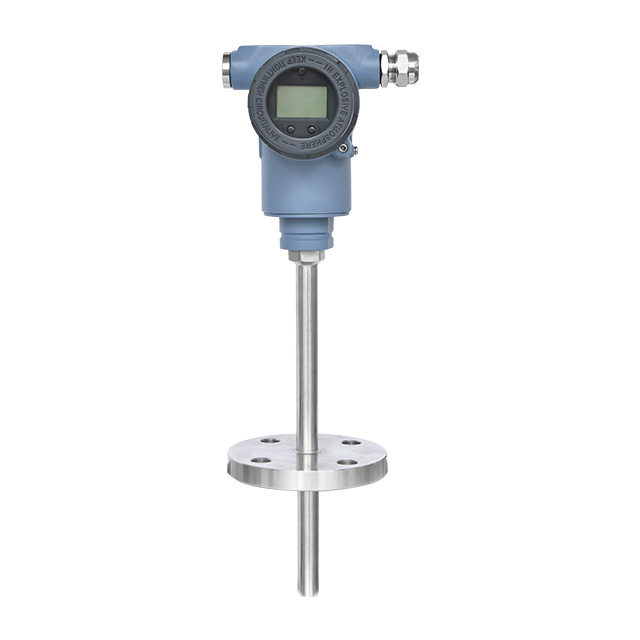
Physical plant layout dictates hardware form factors. The mounting style impacts wiring costs, maintenance access, and device longevity. Select the housing style of your industrial temperature transmitter carefully.
Head-mount units fit directly inside the sensor connection head. This is the industry standard for general-purpose areas. It eliminates long runs of expensive thermocouple extension wire. You only need to run standard copper wire back to the control room. This drastically reduces installation costs. It also eliminates the signal degradation associated with long millivolt wire runs.
DIN-rail devices snap onto rails inside a centralized control cabinet. They are optimal where multiple measurement points converge in one zone. Technicians appreciate them because maintenance happens in a clean, climate-controlled room. However, you must practice careful cabinet temperature management. Packing too many devices together generates excessive heat. You may require cabinet cooling fans to prevent electronic degradation.
Field-mount housings are built for punishment. They are designed for harsh, corrosive, or high-vibration environments. These feature rugged, dual-compartment enclosures. One compartment isolates the sensitive electronics from moisture. The other handles field wiring connections. They often include local digital displays. This allows operators to perform on-site verification without carrying a multimeter into hazardous zones.
Your physical measurement is useless if the data cannot reach the control system safely. The communication protocol determines how much diagnostic data you can retrieve.
Analog Output (4-20mA): This remains the industry standard. It delivers robust, point-to-point signaling. It is highly immune to basic voltage drops. If you only need a primary variable, 4-20mA is cheap and effective.
HART Protocol: HART superimposes digital data over the standard 4-20mA loop. It is essential for remote diagnostics and remote calibration. You can troubleshoot a device from the control room without walking to the field. It also supports multi-drop configurations for legacy systems.
Digital Fieldbuses (Profibus PA, Foundation Fieldbus): These are required for highly integrated, plant-wide digital architectures. They allow multiple devices on a single wire segment. You must evaluate your control system's native compatibility before choosing these. They require specialized engineering knowledge to commission.
Wireless/IIoT Transmitters: Wireless units are perfect for rotating equipment or extremely remote tanks. They shine where hardwiring is physically impossible or cost-prohibitive. Assess battery life carefully. High update rates drain batteries quickly. Also, consider data latency. Wireless is generally not suitable for fast-acting control loops.
Industrial environments destroy fragile electronics. You must design risk mitigation into your procurement specification. Compliance and safety are mandatory, not optional.
Input-to-output galvanic isolation is an absolute necessity. It prevents ground loop errors. Ground loops occur when the sensor and the control system sit at different electrical potentials. This forces stray currents through the signal wire. It destroys measurement accuracy. Isolation blocks these stray currents. It is especially critical in older plants utilizing poor grounding infrastructure.
Always factor in the operating temperature range of the electronics. The ambient climate or nearby process heat can bake the internal circuitry. Do not install a head-mount unit on a 400°C steam pipe without a cooling neck extension. Heat destroys electronic components. Ensure the device specification exceeds your worst-case summer operating conditions.
Explosive atmospheres require strict regulatory compliance. You must evaluate site zone classifications before buying anything.
Intrinsically Safe (IS): Limits electrical energy so it cannot ignite a spark. Requires specialized barrier relays in the control cabinet.
Explosion-Proof (Ex d): Uses a heavy metallic housing. It contains any internal explosion, preventing it from igniting the outside atmosphere.
Mixing up these certifications violates fire codes. Always consult your plant safety engineer to confirm ATEX or IECEx requirements.
Safety Instrumented Systems (SIS) demand certified reliability. You must outline the necessity of SIL 2 or SIL 3 certified models for these loops. SIL devices undergo rigorous failure-mode analysis. They guarantee a predictable safe failure fraction. Never use a standard process unit in a designated safety loop.
Making a final decision requires strategic thinking. You need a structured approach to temperature transmitter selection. Do not just pick the cheapest unit in the catalog. Look at the broader ecosystem.
A smart engineering team standardizes equipment. Evaluate the long-term ROI of standardizing on a single, high-tier universal model. It reduces technician training time dramatically. Maintenance crews only need to learn one menu structure. It also slashes inventory overhead. Instead of stocking ten different models, you stock one universal device. This flexibility ensures you always have a replacement ready at 2:00 AM.
Hardware is only half the equation. Assess the availability of local technical support. When a plant goes down, you need regional experts ready to assist. Check standard lead times for replacement parts. Furthermore, evaluate compatibility with your existing device management software. Ensure the manufacturer provides updated DD (Device Description) or DTM (Device Type Manager) files. Seamless integration into systems like AMS or PACTware streamlines asset management.
The right electronic interface bridges the gap between raw physical variables and actionable control data. It protects your PLC from noise and ensures your chemical reactions stay within tight tolerances. Never treat these instruments as mere commodities. They are the frontline defenders of your process integrity.
We advise engineers to audit their current process challenges thoroughly. Identify ground loops, excessive spare parts, and communication bottlenecks before browsing catalogs. A well-defined specification document saves immense frustration during commissioning.
Take action today. Audit your worst-performing measurement loop. Consult a specific product selection tool or download a technical sizing guide. If you operate in complex environments, contact application engineers for an on-site audit to guarantee success.
A: A sensor detects heat physically. Examples include RTDs or Thermocouples. The transmitter is the electronic device connected to it. It amplifies, linearizes, and converts that raw sensor signal into a robust format, like 4-20mA, for the PLC or DCS.
A: Galvanic isolation breaks the electrical path between the input and output. This prevents ground loops. Ground loops cause erratic readings when different parts of a plant have different voltage potentials. Isolation also provides superior noise rejection against electromagnetic interference.
A: Calibration frequency depends heavily on ambient conditions and accuracy requirements. Extreme temperatures or high vibration degrade electronics faster. Regulatory standards or quality systems like ISO 9001 usually dictate a one- to two-year calibration cycle. There is no strict universal timeline.
A: Yes. Universal transmitters accept both RTDs and Thermocouples. They also accept millivolt and ohm inputs. You simply reconfigure the input type using a handheld HART communicator or configuration software. This vastly simplifies your spare parts inventory.


